

Crate Vintage Club 60 Tube Combo Amp VC6112
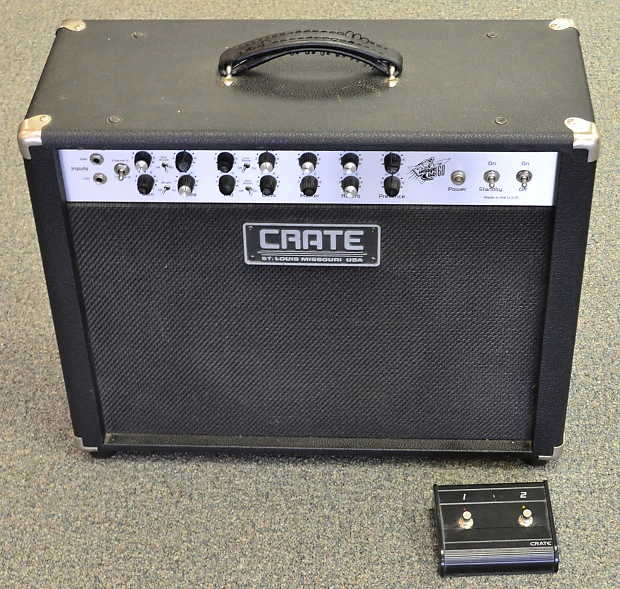
- This USA made Crate Vintage club 60 is a great tube amp for the player that really likes to dial in and personalize their tone. The amp has two inputs for instruments with both active and passive pickups, as well as a clean and lead channel. The amp features gain, treble, mid, bass, and master controls for each channel, as well as reverb and presence. The original Celestion G12 Vintage speaker is rated at 16 ohm. Some of the more special features include:
- A mid boost per channel
- A low boost on the clean channel
- Bright switch on the overdrive channel.
- Includes the original two button foot switch, for ease of switching between channels and master reverb control.
- Effects loop and an extension speaker out, for when you need maximum volume.
$359.00
Rediscovering the Classic Warmth of a Cult Favorite Tube Amp
I still remember the first time I plugged into a Crate Vintage Club 60. It was in a dingy practice space with questionable wiring and even more questionable carpeting, but when those tubes warmed up and I struck my first chord, everything else faded away. There was something magical about that sound—warm, responsive, and distinctly vintage despite bearing a brand name more commonly associated with beginner practice amps. That experience started a fifteen-year love affair with what I now consider one of the most underrated amplifiers of its time.
As a touring musician and gear enthusiast who’s owned more amps than I care to admit to my accountant, I’ve developed a special appreciation for hidden gems in the guitar world. The Crate Vintage Club 60 represents perhaps the greatest value-to-tone ratio in the tube amp market, yet remains curiously overlooked in conversations about affordable tube classics.
Whether you’re discovering these amps for the first time or contemplating adding one to your collection, join me for a deep dive into everything you need to know about the Crate Vintage Club 60—from its origins and specifications to real-world performance and how to find one today.
A Brief History: Not Your Average Crate
When most guitarists hear “Crate,” they immediately picture those small solid-state practice amps that populated beginner bedrooms throughout the 1990s. This association has unfortunately overshadowed what was actually a remarkably ambitious tube amp series from the company.
The Crate Vintage Club series emerged in the late 1980s as part of the company’s push into the premium tube amplifier market. The Vintage Club 60, specifically, was introduced around 1989 and represented Crate’s attempt to capture the warmth and response of classic American tube amps while offering modern features and reliability.
While Crate as a company has since changed hands multiple times and eventually discontinued most of their tube offerings, the Vintage Club 60 developed a dedicated cult following that persists to this day. Production ceased in the early 2000s, making these amps increasingly sought-after on the used market.
Anatomy of the Beast: What Makes It Special
Let’s break down what makes the Vintage Club 60 tick, because understanding its components is crucial to appreciating its unique character.
Tube Configuration: The Heart of the Matter
At its core, the Vintage Club 60 is a genuine all-tube amplifier. It utilizes a quartet of 6L6 power tubes delivering a robust 60 watts of tube power. The preamp section features three 12AX7 tubes that shape the amp’s distinctive voice. This tube complement gives the Vintage Club 60 its characteristic clean headroom and smooth overdrive—a combination that makes it tremendously versatile.
The interaction between these tubes creates that ineffable “springiness” and dynamic response that tube enthusiasts crave. The 6L6 power section provides a firm low end and crisp highs that recall classic Fender designs, while the preamp tubes allow for everything from crystalline cleans to satisfying crunch.
Speaker and Cabinet Design
The Vintage Club 60 comes exclusively as a combo unit housing a single 12-inch speaker. Earlier models featured Celestion speakers, while later iterations came with custom-designed Crate speakers. The cabinet construction utilizes solid pine, which contributes significantly to the resonance and tonal characteristics of the amp.
The open-back design creates a more spacious sound projection than closed-back alternatives, allowing for better room interaction—particularly beneficial in smaller venues where you need the sound to fill the space without overwhelming it.
Channel Configuration and Controls
One of the Vintage Club 60’s most appealing features is its dual-channel design with independent EQ sections—a surprisingly sophisticated setup for its price point. The clean channel offers remarkable headroom with a bright, articulate character that stays pristine even at substantial volumes.
The overdrive channel provides a range of gain options from light breakup to thick, sustaining distortion. While not as high-gain as some modern metal-focused amps, it delivers exactly the kind of musical overdrive that defines classic rock, blues, and even country tones when dialed back.
Each channel features dedicated three-band EQ controls (Bass, Middle, Treble), allowing for precise tonal sculpting. The presence control affects both channels and helps dial in the perfect amount of upper-mid sparkle and cut.
Built-in Effects and Connectivity
Unlike some puristic tube designs, the Vintage Club 60 includes a lush spring reverb that adds dimensional depth to your sound. This isn’t a digital approximation but a genuine tube-driven spring reverb that creates that authentic splash and decay that digital units struggle to replicate.
The amp also features an effects loop for integrating time-based effects like delay and modulation. This thoughtful inclusion allows players to place these effects after the preamp distortion for clearer, more defined effect tones.
Most Vintage Club 60s came with a two-button footswitch for controlling channel switching and reverb activation, though this is often missing from used examples. If you’re in the market for one, it’s worth seeking out this original footswitch or investigating compatible alternatives.
Tonal Characteristics: What Does It Sound Like?
Describing tone in words is always challenging, but the Vintage Club 60 has several distinctive characteristics that define its sound:
Clean Channel: Fender-esque Clarity with Character
The clean channel represents one of the amp’s strongest suits. It delivers a bright, chimey clean tone reminiscent of blackface-era Fender amps but with its own unique personality. There’s a particular midrange presence that gives notes definition without harshness.
With single-coil pickups, you’ll get that quintessential glassy sparkle that cuts through a mix beautifully. With humbuckers, the clean channel remains articulate but takes on a fuller, rounder quality that’s perfect for jazz and fuller clean rhythm work.
One of the most remarkable aspects is how well the clean channel handles pedals. Whether you’re running a transparent overdrive, fuzz, or modulation effects, the Vintage Club 60 provides an exceptional platform that allows your pedals to sound their best.
Overdrive Channel: From Blues to Classic Rock
The drive channel has a distinct voice that sits somewhere between British and American voicings. At lower gain settings, it delivers a responsive, touch-sensitive bluesy growl that cleans up beautifully with your guitar’s volume control.
Push the gain further, and you’re firmly in classic rock territory with thick, harmonically rich distortion that maintains note definition even with complex chords. It’s not designed for extreme metal, but for everything from AC/DC to early Van Halen, it delivers in spades.
What truly sets the Vintage Club 60’s overdrive apart is how it responds to playing dynamics. Dig in hard, and it rewards you with aggressive bite; ease back, and it cleans up organically. This responsiveness creates an engaging playing experience that inspires longer, more creative practice sessions.
Overall Voice: The Special Sauce
Beyond the individual channel characteristics, there’s something special about the overall voice of the Vintage Club 60. It has a three-dimensional quality that many players describe as “breathing” or “alive.” Notes seem to bloom and develop after they’re played, creating a sense of depth that’s particularly rewarding for expressive playing styles.
The amp’s voice also has excellent string-to-string separation, allowing complex chord voicings to retain their clarity rather than mushing together. This quality makes the Vintage Club 60 particularly well-suited for recording, where that definition translates to easier mixing and a more professional sound.
Genre Versatility: Jack of All Trades?
One of the most frequent questions about any amplifier is what genres it handles well. The Vintage Club 60 surprises with its adaptability across musical styles:
Blues and Classic Rock: Home Territory
This is where the Vintage Club 60 truly excels. From Texas blues to British invasion tones, the amp delivers authentic, responsive sounds that sit perfectly in these genres. The way it breaks up when pushed makes it ideal for blues players who use their guitar’s volume control to move between clean and dirty sounds.
For classic rock, the overdrive channel provides all the gain needed for convincing renditions of Led Zeppelin, Rolling Stones, or Tom Petty tones. The EQ flexibility allows you to shape these sounds precisely, whether you’re after bright, cutting leads or thicker rhythm tones.
Country and Americana: Surprising Strength
The clean channel’s bright character and excellent transient response make the Vintage Club 60 an unexpected champion for country styles. It handles chicken pickin’ techniques with aplomb, delivering the snap and twang needed for authentic country lead work.
For Americana and roots music, the amp’s organic compression when pushed to the edge of breakup creates that sweet spot where notes have additional sustain without losing their articulation—perfect for expressive slide playing or rootsy rhythm work.
Jazz: Clean Sophistication
While not typically the first choice for jazz purists, the Vintage Club 60’s clean channel with the bright switch disengaged and the EQ set for a warmer profile can deliver convincing jazz tones, especially with the right guitar. The amp’s headroom ensures that even complex extended chords retain their clarity and harmonic richness.
Metal and Hard Rock: Limitations Emerge
This is where the Vintage Club 60 reaches its genre limitations. While it can handle hard rock admirably, especially with a boost pedal in front, it doesn’t deliver the super-saturated high gain needed for modern metal. That said, for classic metal tones from the ’70s and early ’80s, a good overdrive pedal pushing the already-driven channel can get you surprisingly close.
Live Performance and Recording: How Does It Hold Up?
Stage Presence: Cutting Through the Mix
With 60 watts of tube power, the Vintage Club 60 has more than enough volume for most gig situations. It particularly shines in small to medium venues where its open-back design helps distribute sound evenly throughout the room.
Where many amps struggle is maintaining their tonal character at performance volumes—not so with the Vintage Club 60. The tone remains consistent from bedroom levels to stage volumes, with the tubes simply adding more compression and harmonic richness as they’re pushed harder.
For larger venues, the line out on the back panel allows for connection to PA systems, though many players prefer close-miking the amp to capture its true character. A single SM57 positioned at the edge of the dust cap usually captures the Vintage Club 60’s voice faithfully.
Studio Star: Recording Characteristics
In the recording studio, the Vintage Club 60 reveals its sophisticated voice even more clearly. Engineers often comment on how well it captures using standard dynamic mics, with minimal EQ needed to sit properly in a mix.
The amp’s natural compression when pushed creates that elusive “glue” that helps guitar parts sound cohesive and professional. For clean parts, the headroom ensures that complex chordal work retains definition and sparkle without harshness.
One particularly useful studio technique is to run the Vintage Club 60 at moderate volumes where the power tubes are just beginning to saturate. This sweet spot creates a three-dimensional tone that adds character to tracks without requiring extreme volumes.
Reliability and Maintenance: The Practical Side
Build Quality and Common Issues
Despite being more affordable than many boutique alternatives, the Vintage Club 60 was built with attention to detail. The pine cabinet construction has proven durable over decades, and the chassis design is straightforward and serviceable.
Like any tube amp of this era, there are some common issues to watch for:
- Cold solder joints can develop over time, particularly around the input jacks and tube sockets. These typically manifest as intermittent signal or crackling sounds when the amp is bumped.
- Filter capacitors may need replacement in amps that haven’t been serviced in many years. Symptoms include increased hum or loss of low-end response.
- Reverb tank connections can become corroded or loose, resulting in non-functioning or intermittent reverb effects.
- Tube sockets may become worn after multiple tube changes, requiring cleaning or replacement to maintain solid tube connections.
The good news is that the Vintage Club 60 follows relatively standard tube amp design principles, making it accessible for technicians to service. Parts are generally available, though some proprietary components like certain transformers may require creative solutions if they fail.
Tube Replacement and Biasing
The Vintage Club 60 requires periodic tube replacement like any tube amplifier. Preamp tubes (12AX7) typically last 5-10 years of regular use, while power tubes (6L6) may need replacement every 2-5 years depending on usage patterns and how hard the amp is driven.
One important consideration is that the Vintage Club 60 requires biasing when replacing power tubes. This isn’t a user-adjustable setting and should be performed by a qualified technician. Improper biasing can lead to poor tone, reduced tube life, or even damage to the amplifier.
For those interested in tonal experimentation, the Vintage Club 60 responds well to different tube brands and types. Some players prefer the warmth of JJ or Tung-Sol 6L6 tubes, while others appreciate the clarity of Groove Tubes or TAD options. The preamp section also allows for significant tonal shaping through tube selection, with options ranging from high-gain modern 12AX7s to smoother, vintage-voiced alternatives.
Comparison to Contemporaries: How Does It Stack Up?
To truly understand the Vintage Club 60’s place in the amplifier landscape, it’s worth comparing it to some of its contemporaries and competitors:
Fender Hot Rod Deluxe: The Popular Alternative
The Fender Hot Rod Deluxe is perhaps the most common alternative in a similar price bracket. Both amps offer approximately 60 watts of tube power, but they have distinctly different voices. The Hot Rod tends toward a scooped midrange with very bright highs, while the Vintage Club 60 has a more balanced EQ curve with more pronounced mids.
The Hot Rod has become ubiquitous on stages everywhere, which is both a strength and weakness. It’s a known quantity to sound engineers, but lacks the distinctive character that makes the Vintage Club 60 special. The reverb in the Vintage Club is also generally considered superior, with a deeper, more complex wash than the Hot Rod’s somewhat one-dimensional digital reverb.
Marshall DSL Series: British Counterpoint
Marshall’s DSL amplifiers represent the British-voiced alternative. The Vintage Club 60 splits the difference between American and British tones, with more midrange presence than Fender but less aggressive upper-mid bite than Marshall.
For players who find Marshalls too aggressive but Fenders too scooped, the Vintage Club 60 offers an appealing middle ground that takes pedals particularly well. The Marshall excels at high-gain applications, while the Vintage Club delivers more refined clean and medium-gain tones.
Vox AC30: The Premium Comparison
Though typically more expensive, the Vox AC30 represents another distinct voice in the tube amp market. Both the AC30 and Vintage Club 60 have strong midrange character, but the Vox has a distinctive chime and compression that defines its sound.
The Vintage Club 60 offers more headroom and tighter bass response than the AC30, making it more suitable for players who need pristine cleans at higher volumes. The Vox, conversely, has that iconic Top Boost shimmer that the Crate can’t quite replicate. They’re complementary rather than competitive options for many players.
Finding and Buying a Vintage Club 60 Today
Market Availability and Pricing
Since Crate discontinued the Vintage Club series years ago, these amps are only available on the used market. This has created an interesting pricing dynamic where these once-affordable amps have slowly appreciated as awareness of their quality has spread.
In the late 2000s, you could regularly find Vintage Club 60s for $250-350. Today, well-maintained examples typically sell for $450-650, with pristine units occasionally fetching up to $800. This still represents exceptional value compared to many new tube amps with similar features and quality.
Availability varies regionally, but online marketplaces like Reverb, eBay, and Facebook Marketplace regularly have listings. Patient buyers who set up alerts can often find better deals by waiting for motivated sellers rather than jumping on the first available unit.
What to Look For When Buying Used
When evaluating a used Vintage Club 60, several factors should influence your decision:
- Service history: If available, a documented history of regular maintenance and tube replacements is extremely valuable. Amps that have been professionally serviced will generally need less immediate attention.
- Cosmetic condition: While not directly affecting tone, the external condition often indicates how the amp was treated. Excessive wear may suggest rough handling that could affect internal components.
- Original footswitch: The factory footswitch is often missing from used examples. While third-party alternatives exist, having the original complete package increases both functionality and value.
- Speaker replacement: Some previous owners may have upgraded the stock speaker. This can be either positive or negative depending on the replacement choice. Celestion Vintage 30s or Warehouse Guitar Speakers veterans are popular upgrades that often enhance the amp’s capabilities.
- Transformer condition: Listen for excessive hum or check for visible rust on transformer casings, as these components are expensive to replace if failing.
- Complete tube set: Ensure all tubes are present and functioning. Replacing a full set of tubes can add $100+ to your purchase cost.
Always test the amp thoroughly before purchasing if possible. Check both channels, the reverb functionality, and listen for any unusual noises that might indicate electrical issues. If buying remotely, request audio or video demos demonstrating all functions.
Modifications and Upgrades: Making It Your Own
One of the joys of owning a somewhat under-the-radar amp like the Vintage Club 60 is the opportunity to personalize it. Several common modifications can enhance its performance:
Speaker Upgrades
The most impactful modification is typically a speaker upgrade. Popular choices include:
- Celestion Vintage 30: Adds midrange focus and handle high volumes well
- Eminence Cannabis Rex: Provides warmer, fuller lows with smooth highs
- Warehouse Guitar Speakers G12C/S: Offers balanced response with American-voiced character
- Jensen P12Q: Brings vintage Fender-like chime and sparkle
Speaker choice dramatically affects the amp’s final voice, so research thoroughly or try to hear examples before committing to a particular model.
Capacitor Upgrades
Many technicians recommend replacing the stock signal capacitors with higher-quality alternatives. This subtle modification can improve clarity and dynamic response. Popular choices include Sprague Orange Drops, Mallory 150s, or Russian K40Y-9 paper-in-oil capacitors for a more vintage-voiced alternative.
Bias Adjustment Points
Some technicians install external bias test points to facilitate easier power tube replacement and biasing. This modification makes maintenance more accessible and encourages experimentation with different tube types.
Effects Loop Modifications
The stock effects loop works well but can be improved with a simple buffer circuit that some technicians offer. This enhancement provides better integration with a wider range of effects pedals, particularly those with unusual input/output impedances.
Reverb Tank Upgrades
For those seeking enhanced reverb quality, replacing the stock tank with an Accutronics long decay tank can provide richer, deeper reverb effects that bloom more naturally.
Living with the Vintage Club 60: Real-World Experience
After owning my Vintage Club 60 for over a decade, I’ve developed a deep appreciation for its practical advantages and quirks. Here are some real-world insights that might not be obvious from specifications alone:
Temperature Management
These amps run hot, particularly around the power tubes. Ensuring adequate ventilation is essential for long-term reliability. I’ve found that elevating the amp slightly on rubber feet helps improve airflow and reduce operating temperature during extended sessions.
Sweet Spot Settings
While the amp is versatile across its entire range of settings, I’ve discovered certain sweet spots that deliver particularly magical tones:
For clean tones, setting the clean channel with bass at 4, mids at 6, and treble at 7 provides a balanced foundation that works well with most guitars. Adding just a touch of reverb (around 3) creates dimension without washing out the signal.
For overdrive tones, I’ve found that keeping the gain around 5-6 rather than maxed creates more responsive, dynamic distortion. Setting the mids slightly higher than you might think (around 7) helps the guitar cut through a band mix effectively.
Pedal Platform Excellence
One of the Vintage Club 60’s hidden talents is how exceptionally it handles pedals. The clean channel accepts drive pedals beautifully, allowing them to impart their character without being colored too heavily by preamp distortion.
Particularly successful pairings I’ve found include Tube Screamers and Klon-style overdrives into the clean channel, which create singing lead tones with excellent sustain. Fuzz pedals also integrate well, retaining their unique character rather than turning muddy as they can through some amps.
Recording Techniques
For studio use, I’ve found that the Vintage Club 60 responds beautifully to the following miking approaches:
- A dynamic microphone (SM57 or MD421) positioned slightly off-center of the speaker cone captures the amp’s core sound faithfully
- Adding a ribbon microphone (like a Royer R-121) a few inches back introduces additional warmth and dimension
- For ambient tracks, a condenser microphone placed 3-4 feet away captures room interaction that adds natural space
The amp records particularly well at medium volumes where the power tubes are working but not completely saturated. This “edge of breakup” zone creates rich harmonics that translate beautifully to recordings.
The Future of Vintage Club 60s: Investment Potential
While purchasing musical equipment purely as an investment is rarely advisable, the Vintage Club 60 represents an interesting case study in how certain underappreciated gear gradually gains recognition and value.
Several factors suggest these amps may continue to appreciate:
- Limited supply: As a discontinued product with a finite number manufactured, the available supply can only decrease over time.
- Growing reputation: Online forums and word-of-mouth continue to spread awareness of these amps’ quality, increasing demand among informed players.
- Comparative value: As new tube amp prices continue to rise, the value proposition of well-made used alternatives becomes more compelling.
- Reliability record: Unlike some vintage gear that suffers from inherent design flaws, the Vintage Club 60 has proven remarkably reliable over decades, making them practical players rather than just collector’s items.
While they’re unlikely to see the explosive value growth of certain vintage Fender or Marshall models, the steady appreciation suggests these amps represent both a solid playing tool and a reasonable store of value.
Conclusion: The Vintage Club 60’s Legacy
After spending thousands of words analyzing technical specifications, tonal characteristics, and practical considerations, what makes the Crate Vintage Club 60 truly special comes down to something less tangible: it’s an amp with soul.
In a market increasingly dominated by digital modeling and mass-produced designs, the Vintage Club 60 represents a brief moment when a company primarily known for budget gear reached higher and created something of lasting value. It combines genuine tube tone, thoughtful features, and remarkable versatility in a package that remains accessible to working musicians.
For players discovering these amps today, they offer an entry point into genuine all-tube tone without the inflated prices of more famous brands. They reward intimate knowledge and skilled playing with responsive, dynamic performance that digital alternatives still struggle to replicate.
The Crate Vintage Club 60 represents perhaps the greatest value-to-tone ratio in the tube amp market, a hidden gem hiding in plain sight among more celebrated names. For the player willing to look beyond brand prestige to actual performance, these amps continue to offer exceptional musical tools that inspire creativity and expression—the true measure of any instrument’s worth.
Whether you’re a seasoned professional or an enthusiastic amateur, the Vintage Club 60 deserves consideration not as a compromise or stepping stone, but as a legitimate final destination in the often endless pursuit of tone. Sometimes the best gear isn’t what everyone else is playing, but what speaks to you personally—and for a growing number of players, that’s exactly what the Vintage Club 60 does.