

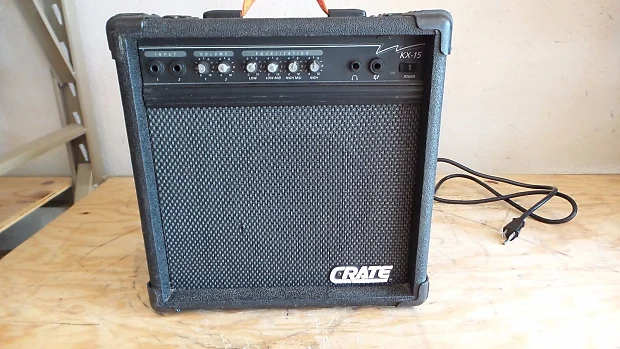
Crate KX-15 KEYBOARD/GUITAR AMP
- This Crate KX-15 Keyboard Guitar Amp Features Crate 8 in. Speaker and Tweeter, 12+ Watts RMS, 2 Channels, 4-band EQ Limiter, Headphone and external speaker jack. Works fine. In great used condition!
$79.95
Discovering Hidden Gems in a World of Flashy Options
As I sit in my home studio surrounded by various amplifiers I’ve collected over the years, my fingers keep returning to the volume knob of one particular unit: my trusty Crate KX-15. It’s been with me for over a decade now, and despite its modest appearance and specifications, it continues to surprise me with its versatility and reliability. Today, I want to take you through a comprehensive journey into the world of this underappreciated amplifier and explain why, despite its age and relatively humble status, the KX-15 might just be the perfect amplifier for many musicians out there.
When I first started exploring amplifiers beyond my first cheap starter kit, I was overwhelmed by the endless options, technical specifications, and vastly different price points. I remember walking into my local music store with a modest budget and a head full of questions. That’s when the store owner, an older gentleman with callused fingers that told stories of decades of guitar playing, pointed me toward the Crate KX-15 sitting unassumingly in the corner. “Don’t let its size fool you,” he said. “This little box has surprised many professional musicians.”
At the time, I was skeptical. How could something so compact and affordable compete with the big names that dominated magazine ads? Well, after years of playing through it in various settings, I can confidently say that the Crate KX-15 delivers professional sound quality far beyond its price point. But before I dive into my personal experiences, let’s cover the basics for those unfamiliar with this little gem.
Understanding the Crate KX-15: Specifications and Design
The Crate KX-15 is a compact solid-state amplifier that puts out 15 watts of power through an 8-inch speaker. Originally designed as a keyboard amplifier (hence the “K” in KX-15), it quickly gained popularity among guitarists and other instrumentalists for its clean sound and surprising versatility.
Physically, the KX-15 isn’t going to win any beauty contests with its utilitarian design. Measuring approximately 13 inches high, a foot wide, and 9 inches deep, and weighing around 20 pounds, it’s designed for portability without sacrificing tone. The classic black textured covering and simple metal grill give it a professional, if somewhat understated, appearance.
The control panel is refreshingly straightforward: volume, bass, mid, and treble controls allow for basic sound shaping. One of the most appealing aspects of the KX-15 is its simplicity—there are no overwhelming arrays of buttons, switches, or digital menus to navigate. It’s an analog affair through and through, which for many musicians (myself included) is a major plus.
Despite being marketed primarily as a keyboard amp, the KX-15 became somewhat of a cult favorite among guitarists looking for clean tones on a budget. The reason becomes apparent the moment you plug in: unlike many budget amps that attempt to emulate high-gain distortion (often with disappointing results), the KX-15 focuses on delivering a pristine clean sound that serves as an excellent foundation for pedals and effects.
The Surprising Versatility of the KX-15
When I first brought my KX-15 home, I intended to use it solely for practicing with headphones (yes, it does have a headphone jack for silent practice). However, I quickly discovered that this little amplifier could handle much more than quiet bedroom sessions.
The 15 watts it produces might not sound like much on paper, but in practice, it’s more than enough for home practice, rehearsals, and even small venues. I’ve used it for intimate coffee shop performances and small outdoor events, and it’s held its own admirably. The key is understanding what those 15 watts are designed to do—deliver clean, articulate sound rather than earth-shaking volume.
One aspect that continues to impress me is how well the KX-15 takes to various instruments. As mentioned, it was originally designed for keyboards, but I’ve run electric guitars, acoustic-electrics, bass (in a pinch), electronic drums, and even microphones through it with surprisingly good results. This versatility makes it an excellent choice for multi-instrumentalists or for households where several family members play different instruments.
The clean headroom—that is, how loud you can push the amp before it starts to distort—is impressive for an amplifier in this price range and size category. This is particularly valuable if you’re someone who relies on pedals for your tone shaping, as the KX-15 provides an excellent blank canvas that doesn’t color your sound too heavily.
Input Options and Connectivity
Another strength of the KX-15 is its multiple input channels. Unlike many practice amps that provide just a single input, the KX-15 features two separate channels, each with its own volume control. This allows you to connect two instruments simultaneously—perfect for duet practice sessions or for running a microphone alongside an instrument.
The headphone jack is another feature I’ve come to appreciate more over the years. When I lived in an apartment with thin walls, this feature was an absolute lifesaver, allowing me to practice at any hour without disturbing neighbors. The headphone output delivers a surprisingly good tone, not the thin, lifeless sound that plagues many practice amps’ headphone outputs.
While the KX-15 doesn’t have a dedicated effects loop (a feature typically found on more expensive amplifiers), its clean tone makes it an excellent platform for front-end effects. I’ve run everything from subtle overdrive pedals to wild modulation effects through my KX-15, and it handles them all admirably. The relative lack of coloration in its base tone means that your effects sound the way they’re supposed to, without the amplifier adding unwanted characteristics.
Sound Quality and Tone Control
The EQ section of the KX-15 might look basic with just bass, mid, and treble controls, but don’t let that fool you. These three knobs provide a surprising amount of tonal flexibility, especially when you consider that many amplifiers in this price range often omit the crucial midrange control altogether.
The bass control is particularly effective, allowing you to add substantial low-end punch without making the sound muddy—a common issue with smaller amplifiers. The midrange control lets you sculpt the character of your sound, from scooped mids for more modern tones to mid-forward sounds that cut through a mix. And the treble knob can take you from warm, rounded highs to crisp, bright tones that highlight detail.
One of my favorite aspects of the KX-15’s tone is its natural warmth. Despite being a solid-state amplifier (as opposed to tube amps, which are often praised for their warmth), the KX-15 manages to avoid the sterile, cold sound that plagues many affordable solid-state options. There’s a certain organic quality to its clean tone that makes playing through it a pleasure.
Historical Context and Production Status
The Crate KX-15 was first released in the early 1990s, during a time when Crate was establishing itself as a manufacturer of reliable, affordable amplifiers. While Crate as a brand has gone through various transitions over the years (eventually becoming part of the Loud Technologies group alongside brands like Mackie and Ampeg), the KX-15 remains one of their more beloved products.
Unfortunately, the KX-15 is no longer in production. Crate discontinued the model several years ago, which means that if you’re interested in acquiring one, you’ll need to look to the used market. The good news is that these amplifiers were built to last, and many are still functioning perfectly after decades of use.
In terms of current market value, KX-15s typically sell used for between $50 and $120, depending on condition. This makes them an extraordinary value proposition, especially when you consider that comparable new amplifiers often cost two to three times as much without necessarily offering better sound quality.
Common Issues and Maintenance Tips
No amplifier is perfect, and the KX-15 does have some known issues that potential buyers should be aware of. The most common complaint involves the potentiometers (the volume and EQ knobs), which can become scratchy and noisy over time. Fortunately, this is easily remedied with a can of contact cleaner in most cases, or with replacement potentiometers if the problem is more severe.
Another occasional issue is related to the input jacks, which can develop loose connections after years of use. Again, this is typically an easy fix for any qualified technician, or even for a moderately handy owner with basic soldering skills.
Some users have reported speaker issues after pushing the amp too hard for extended periods. The 8-inch speaker isn’t designed for extreme volume levels, and while it can handle the full 15 watts the amplifier produces, running it at maximum volume for hours on end may eventually take its toll. I’ve found that keeping the volume at around 75% for extended sessions helps preserve the speaker’s longevity.
In terms of general maintenance, the KX-15 is refreshingly simple. Dust it occasionally, avoid extreme temperature fluctuations, and don’t spill liquids on it (advice that applies to virtually all electronic equipment). With these basic precautions, a KX-15 can easily provide decades of reliable service.
Comparing the KX-15 to Contemporary Options
How does a decades-old design compare to modern alternatives? Surprisingly well, actually. While newer amplifiers might offer digital effects, Bluetooth connectivity, and app integration, these features often come at the expense of basic sound quality in the budget price range.
The KX-15’s approach—focusing on doing one thing (clean amplification) very well rather than doing many things adequately—gives it a leg up over many contemporary options. Modern 15-watt practice amps like the Fender Frontman, Orange Crush, or Blackstar ID:Core series certainly have their strengths, particularly in terms of built-in effects and specialized voicings. However, I’ve yet to find a modern equivalent that matches the KX-15’s combination of clean headroom, tonal flexibility, and value for money in the used market.
For guitarists specifically, it’s worth noting that many modern practice amps are designed with high-gain distortion in mind. If heavy distortion is a crucial part of your sound, one of these purpose-built guitar amps might serve you better. However, if you prefer clean tones or use pedals for distortion, the KX-15 remains a compelling option.
Who Should Consider a Crate KX-15?
Based on my experience with the KX-15 and understanding of its strengths and limitations, here are the musicians who might find it particularly valuable:
- Beginners on a budget who want an amp that can grow with them and won’t need replacing after a year
- Pedal enthusiasts looking for a clean platform that lets their effects shine
- Multi-instrumentalists who need one amp that can handle different instruments
- Apartment dwellers who appreciate the headphone option for silent practice
- Keyboardists seeking an affordable, portable amplifier (its original intended purpose)
- Singer-songwriters who want to amplify both vocals and instruments through one compact unit
- Vintage gear enthusiasts who appreciate simple, reliable designs from decades past
On the other hand, the KX-15 might not be ideal for:
- Metal guitarists seeking high-gain distortion without pedals
- Performers who regularly play medium to large venues (though it can work with a PA system)
- Musicians who want built-in digital effects and modern connectivity options
My Personal Journey with the KX-15
I still remember the first time I really put my KX-15 through its paces. I had been invited to play a small acoustic set at a local art gallery opening. The space was intimate—maybe 40 people in a converted industrial loft—and I was nervous about whether my modest amplifier would be sufficient.
I arrived early to set up, plugged in my acoustic-electric guitar, and did a sound check. The gallery owner, who had initially looked skeptical at the size of my amp, raised his eyebrows in pleasant surprise as the clear, warm tones filled the space. “That little thing sounds great,” he remarked, and I felt a surge of pride in my unassuming amplifier.
Throughout the years, my KX-15 has been there for living room jam sessions, songwriting workshops, small outdoor performances, and countless hours of personal practice. It’s been knocked over (twice), rained on (once, briefly), transported in car trunks, and generally subjected to the typical musician’s lifestyle. Through it all, it has never failed me.
Perhaps the most telling testament to the KX-15’s quality is that despite owning several more expensive amplifiers, I’ve never been able to bring myself to sell it. It’s become something of a security blanket—I know that no matter what other gear might fail me, I can always plug into the KX-15 and get a sound I’m happy with.
Finding and Purchasing a Crate KX-15
If I’ve convinced you that a KX-15 might be worth adding to your collection, you’re probably wondering where to find one. Since they’re no longer in production, your options are limited to the second-hand market. Here are some places to look:
- Online marketplaces like eBay, Reverb, and Facebook Marketplace frequently have KX-15s available
- Local pawn shops and music stores that deal in used gear
- Garage sales and estate sales can sometimes yield unexpected finds
- Musician forums often have classified sections where members sell equipment
When evaluating a used KX-15, here are some things to check:
- Test all inputs to ensure they’re working properly without excessive noise or cutting out
- Try all the knobs through their full range to check for scratchiness or dead spots
- Listen for speaker damage such as rattling or distortion at moderate volumes
- Inspect the cabinet for serious structural damage (though cosmetic wear is to be expected)
- Check the power cord for fraying or damage
A KX-15 in good working condition should cost between $50-120 depending on cosmetic condition and the seller’s knowledge of its value. I’ve occasionally seen them go for as little as $30-40 when sold by someone unaware of their cult following, and as high as $150 for units in pristine condition.
Maximizing Your KX-15 Experience
If you do acquire a KX-15, here are some tips I’ve gathered over the years to get the most out of it:
- Experiment with placement: Unlike many amplifiers that sound best on the floor, the KX-15 often performs better when elevated. I keep mine on a small stand that puts it about 24 inches off the ground, which helps the sound project better.
- Find the sweet spot on the volume knob: Around 70-80% of maximum is where I find the amp sounds most balanced—loud enough to get some natural compression without pushing the speaker too hard.
- Use the EQ creatively: The bass, mid, and treble controls are more interactive than they might seem. Small adjustments can significantly change the character of your sound.
- Consider a speaker upgrade: If you’re handy with a soldering iron, replacing the stock 8-inch speaker with a higher-quality alternative can take the KX-15’s sound to another level. Popular replacements include certain models from Eminence and Jensen.
- Try different instruments: Don’t limit yourself to just using it with one instrument. The KX-15’s versatility is one of its greatest strengths.
The Legacy of Crate Amplifiers
The story of the KX-15 can’t be fully appreciated without understanding a bit about Crate as a company. Founded in St. Louis, Missouri in the late 1970s, Crate made its name producing affordable amplifiers that prioritized reliability and sound quality over flashy features.
Throughout the 1980s and 1990s, Crate amplifiers became fixtures in practice spaces, garages, and small venues across America. While they never achieved the prestige of brands like Fender, Marshall, or Vox, they earned respect for delivering solid performance at accessible price points.
The KX series, introduced in the early 1990s, represented Crate’s venture into keyboard-specific amplification. However, the versatility of these amps quickly made them popular with guitarists and other instrumentalists as well. The KX-15, as the smallest member of this series, found particular favor among musicians in apartments, dorm rooms, and other settings where space and volume constraints were concerns.
While Crate as a brand has diminished in prominence over the years (its parent company shifted focus to other brands in its portfolio), the legacy of their amplifiers lives on through the thousands of units still in active use today. The KX-15 stands as perhaps the perfect embodiment of Crate’s philosophy: unpretentious, reliable, versatile, and accessible.
Final Thoughts: The Underappreciated Classic
As we wrap up this exploration of the Crate KX-15, I find myself reflecting on why certain pieces of musical equipment resonate with us. It’s rarely just about technical specifications or features—there’s an intangible quality that some gear possesses, a sense that it enhances rather than interferes with the creative process.
The KX-15 has this quality in abundance. Its simplicity encourages focus on playing rather than tweaking. Its clean, uncolored tone respects the natural voice of your instrument. Its reliability builds confidence that you can focus on the music without technical distractions.
In a world where gear acquisition syndrome runs rampant and the latest digital modeling amps promise to deliver any sound imaginable, there’s something refreshingly honest about the KX-15. It doesn’t try to be everything to everyone. It doesn’t pretend to transform your $200 guitar into a $2000 one. It simply provides a clean, faithful amplification of whatever signal you feed it, with just enough EQ control to shape the tone to your liking.
If you’re in the market for an affordable, versatile amplifier that puts sound quality above bells and whistles, I encourage you to seek out a Crate KX-15. In my experience, few amplifiers at any price point offer the same combination of clarity, reliability, and value. While flashier, more feature-packed options may catch your eye initially, the KX-15’s straightforward excellence has a way of winning over musicians who value substance over style.
After all these years and all the amplifiers that have come and gone from my collection, my KX-15 remains a constant companion—a testament to the lasting value of thoughtful design focused on the essentials. In the often overwhelming world of music gear, sometimes the most unassuming options prove to be the most enduring.