

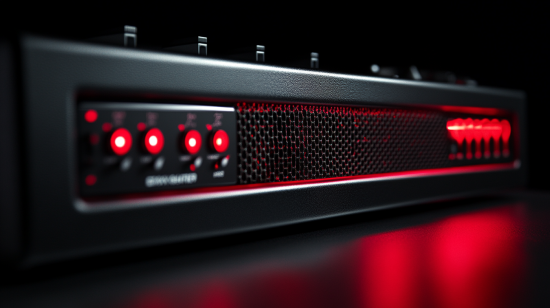

Crate GX-1600 Solid State Guitar Amp, 160 Watts
- SOLID STATE GUITAR AMPLIFIER, 160 WATTS @ 4 OHMS, 2 CHANNELS, NO FOOTSWITCH, OVERALL IN GREAT SHAPE, HOWEVER SOME OF THE POTS ARE A LITTLE SCRATCHY, SHOWS SOME WEAR ON CONTROL PLATE AROUND POWER SWITCH, S/N: GJHDE20091
$139.00
Unleashing the Beast: Everything You Need to Know Before Buying This Legendary Amplifier
When I first laid eyes on the Crate GX-1600, I wasn’t prepared for what would become a decade-long love affair with what I consider one of the most underrated amplifiers in the guitar world. That imposing black box with its intimidating control panel has helped shape my sound through countless gigs, recording sessions, and late-night practice marathons. If you’re considering adding this powerhouse to your rig, I’m here to share everything I’ve learned from my journey with the GX-1600 – the good, the bad, and the gloriously loud.
Understanding the Beast: What Exactly Is the Crate GX-1600?
The Crate GX-1600 isn’t just another amplifier – it’s a statement piece that commands attention the moment you wheel it onto a stage. At its core, this is a solid-state head amplifier that delivers an impressive 160 watts of raw, unbridled power. When I first plugged into one back in the early 2000s, I was immediately struck by how such a relatively compact unit could produce such an earth-shaking sound.
Manufactured by the once-prominent Crate Amplifiers (a subsidiary of the St. Louis Music company), the GX-1600 was designed to compete in the high-wattage solid-state amplifier market. While tube amplifiers might get all the vintage glory, this solid-state monster carved out its own niche among musicians who needed clean headroom, reliability, and enough volume to fill large venues without breaking the bank.
During its production run, the GX-1600 became particularly popular among metal and hard rock guitarists, though I’ve seen blues players coax some surprisingly warm tones from it as well. Its distinctive black tolex covering and metal corner protectors give it that classic “road-ready” look that has aged surprisingly well in an era of increasingly complex digital modeling amps.
Power That Speaks Volumes: The Technical Specifications
Let’s talk about what’s under the hood of this beast. The headline feature is undoubtedly its power rating – 160 watts delivered through a solid-state design. This might not sound like much compared to today’s 300+ watt behemoths, but I can tell you from experience that 160 watts is more than enough to handle most gigging situations, and even small to medium festivals when paired with the right cabinet.
The solid-state architecture has its advantages. Unlike tube amps that need regular maintenance and replacement of vacuum tubes, the GX-1600 was built for reliability. In my decade of using one, I never had a single component failure – something I can’t say about some of my more expensive tube heads that seemed to blow power tubes at the most inconvenient moments.
I’ve always appreciated the weight factor too. At approximately 25 pounds (around 11.3 kg), the GX-1600 is substantially lighter than tube heads of comparable power. This might seem like a minor point, but after loading in and out of venues three times a week, your back will thank you for every pound saved.
The dimensions are relatively compact for an amp of this power – roughly 22 inches wide, 10 inches high, and 9 inches deep. This means it doesn’t take up excessive space in your vehicle or on stage, a consideration that becomes increasingly important as you accumulate more gear.
Channel-Surfing: The Multi-Channel Design
One of the GX-1600’s most notable features is its three-channel design, allowing for incredible versatility across different playing styles. This was revolutionary when it was introduced and remains a highly practical feature today.
The clean channel is surprisingly pristine for a solid-state amp of its era. While it doesn’t have the warmth of high-end tube cleans, it provides a neutral, transparent platform that takes pedals exceptionally well. I’ve found this channel works beautifully with my collection of overdrive and modulation pedals, allowing their character to shine through without unwanted coloration.
The second channel delivers a warm crunch that’s perfect for classic rock rhythms or blues leads. With the gain dialed back, you can achieve those edge-of-breakup tones that respond well to pick attack and guitar volume adjustments. Push the gain further, and you’re entering hard rock territory with thick, sustaining chords and singing lead tones.
The third channel is where the GX-1600 really earns its reputation among metal players. With high-gain capabilities that were ahead of its time, this channel produces thick, saturated distortion that remains articulate even with complex chord voicings. While it might not have the liquid quality of a high-end Mesa or Bogner, it holds its own remarkably well, especially when you consider the price point.
Channel switching can be controlled via the included footswitch, which connects to the amp via a standard 1/4-inch cable. This makes transitioning between different tones seamless during live performances – a feature I’ve come to rely on countless times when moving from clean verses to distorted choruses without missing a beat.
Tone Sculpting: EQ and Control Features
The GX-1600’s front panel might look intimidating at first glance, but the layout is actually quite intuitive once you spend some time with it. Each channel has its own dedicated 3-band EQ (Bass, Middle, Treble), allowing for precise tone shaping across different gain structures. This independent EQ is crucial – what works for your clean tone rarely translates directly to high-gain settings.
Beyond the standard EQ controls, each channel also features its own volume and gain knobs. The gain controls are particularly responsive, offering usable settings throughout their entire range rather than becoming unusable at either extreme.
One of my favorite features is the presence control, which adjusts the upper midrange frequencies. This single knob can be the difference between a cutting lead tone that slices through a mix and a more laid-back sound that sits comfortably within a dense arrangement. I typically run my presence at around 6-7 for leads, dialing it back to 3-4 for rhythm work.
The amp also features a master volume control that governs the overall output level regardless of channel settings. This proves invaluable when you need to adjust your volume without disrupting your carefully dialed-in tone settings for each channel.
Effects That Impress: Built-In DSP Processing
While many amplifiers of its era offered rudimentary built-in effects, the Crate GX-1600 went several steps further with its comprehensive digital effects processor. The effects section includes reverb, delay, chorus, flanger, and tremolo – covering most of the basics that guitarists commonly use.
The quality of these effects surprised me when I first explored them. The reverb has enough depth for spacious ambient tones without becoming muddy. The delay offers sufficient control over timing and repeats to create everything from slap-back to ambient washes. The modulation effects (chorus and flanger) add dimension without overwhelming the core tone.
Each effect can be adjusted via dedicated parameters, allowing for customization beyond what many comparable amps offered. The effects can also be assigned to different channels, meaning you could have reverb and delay on your clean channel, while keeping your high-gain channel dry for tight rhythm playing.
The effects loop on the back panel is another valuable feature, allowing you to integrate external effects processors into your signal chain. This is especially useful for time-based effects like delay and reverb, which typically sound better when placed after the preamp section rather than before it.
Real-World Performance: From the Studio to the Stage
In the studio, the GX-1600 performs admirably, especially when you take the time to dial in your settings carefully. The clean channel records well, providing a neutral canvas for layering guitar parts. The distortion channels can sound a bit harsh under close micing, but this is easily remedied with proper microphone placement or by running the amp through an attenuator and cabinet simulator.
Where the GX-1600 truly shines is in live performance settings. The 160 watts of power ensures you’ll never run out of headroom, even in larger venues. I’ve used mine in everything from small clubs to outdoor festivals, and it has always delivered consistent, reliable performance regardless of the environment.
The amp’s projection and clarity help it cut through even the densest mix. This is particularly important for lead playing – I’ve never had to fight to be heard during solos, even when playing alongside keyboards, bass, drums, and a second guitarist.
Durability is another area where the GX-1600 excels. The robust construction and solid-state design mean it can withstand the rigors of regular gigging without developing issues. I’ve seen these amps survive being dropped, exposed to rain, and subjected to extreme temperature changes – all while continuing to perform reliably.
Speaker Compatibility: Finding the Perfect Match
The Crate GX-1600 is a head unit, meaning you’ll need to pair it with a separate speaker cabinet to produce sound. This flexibility allows you to customize your rig based on your specific needs and preferences.
For maximum power handling, a 4×12 cabinet rated for at least 160 watts is recommended. I’ve had excellent results with Marshall 1960A cabinets loaded with Celestion Vintage 30s, which complement the amp’s character nicely. The combination provides a balanced sound with tight low-end, present mids, and controlled highs.
If you’re looking for something more portable, a 2×12 cabinet can also work well, though you may sacrifice some low-end presence and overall volume. For smaller venues or practice spaces, this might actually be preferable, as it allows you to push the amp harder without overwhelming the room.
The impedance selector on the back panel allows you to match the amp to cabinets of different impedances (4, 8, or 16 ohms), providing flexibility when working with various speaker configurations. Always ensure your cabinet’s impedance matches the setting on the amp to prevent potential damage.
Genre Versatility: Finding Your Sound
While the GX-1600 has a reputation as a metal amp, I’ve found it to be surprisingly versatile across different musical styles. Its clean channel handles jazz and country admirably, especially when paired with the right guitar and cabinet combination. The crunch channel excels at blues and classic rock tones, while the high-gain channel can deliver everything from hard rock to extreme metal.
For blues and classic rock, I recommend keeping the gain moderate on the second channel, with the EQ set to emphasize the midrange (bass at 4, mids at 7, treble at 5). This creates a warm, responsive tone that works well with both single coils and humbuckers.
Metal players will gravitate toward the third channel with its high-gain characteristics. For modern metal tones, I’ve found success with a “scooped” EQ setting (bass at 7, mids at 3, treble at 6), which produces that aggressive, cutting sound associated with the genre. For more traditional metal, bringing the mids up to around 5 helps maintain definition and character.
Alternative and indie rock players can find their sweet spot with the second channel’s gain set between 5-7, creating a saturated but not overwhelming distortion that works well for both rhythmic playing and melodic leads.
The Competition: How Does It Stack Up?
When comparing the GX-1600 to other high-wattage amplifiers in its class, several strengths and weaknesses become apparent. Against other solid-state amps like the Marshall MG series or Peavey Bandit, the Crate offers superior power handling and a more versatile effects section.
Compared to tube amplifiers in a similar price range, the GX-1600 provides significantly more output power and reliability, though it sacrifices some of the dynamic responsiveness and harmonic richness that tubes naturally provide. The Peavey 5150/6505 delivers more authentic high-gain tones, but at a much higher price point and with the added maintenance considerations of tube technology.
Modern modeling amps like the Line 6 Spider or Boss Katana offer more effects and amp simulations, but rarely match the raw power and simplicity of the GX-1600. For players who value straightforward operation and stage volume over extensive digital options, the Crate remains a compelling option.
Known Issues: The Complete Picture
In the interest of providing a comprehensive guide, I should address some common issues reported by GX-1600 owners. The most frequently mentioned concern involves the effects section – some units develop intermittent problems with the digital processor over time, resulting in effects cutting in and out unexpectedly. This is typically repairable by a qualified technician, but it’s something to be aware of when purchasing, especially on the used market.
Another reported issue involves the footswitch connection becoming unreliable after extensive use. This is often due to the 1/4-inch jack becoming loose over time. Again, this is generally an easy fix, but it’s worth checking if you’re examining a used unit.
Some players also note that the fan can become noisy after years of use. The cooling fan is essential to prevent overheating, so if you notice excessive noise, it’s worth having it serviced rather than disconnecting it.
Despite these potential issues, the GX-1600 is generally known for its reliability. Most problems that do arise are relatively minor and repairable, which is part of why these amps continue to have a following decades after their initial release.
User Experiences: The Verdict from the Community
The community consensus on the GX-1600 is generally positive, particularly among players who purchased it new and have maintained it properly. On forums and in online reviews, users consistently praise its power, versatility, and value for money.
Many longtime owners express surprise at how well their GX-1600s have held up over the years, with some reporting units still performing flawlessly after 15+ years of regular use. This longevity is a testament to the solid construction and component quality.
The amp seems to have developed something of a cult following among certain segments of the guitar community, particularly those who appreciate its no-nonsense approach to high-gain sounds without the complexity of modern digital modeling.
Common complaints typically center around the somewhat dated effects by current standards and the occasionally harsh character of the high-gain channel when not properly dialed in. These criticisms should be weighed against the amp’s strengths and your specific needs as a player.
Availability and Pricing: Finding Your GX-1600
As of my last update, the Crate GX-1600 is no longer in production. The Crate brand itself has changed hands multiple times since the amp’s heyday, with production of most of their legacy models discontinued. This means that if you’re interested in acquiring a GX-1600, you’ll need to look to the used market.
Online marketplaces like Reverb, eBay, and local classified sites regularly feature GX-1600s for sale. Based on recent listings, you can expect to pay between $200-$350 for a unit in good working condition, with prices varying based on cosmetic condition and whether all original accessories (footswitch, manual, etc.) are included.
When shopping for a used GX-1600, I recommend testing all channels, controls, and effects thoroughly before purchasing. Pay particular attention to any unusual noises, intermittent issues with the effects, and the condition of the input and output jacks.
If possible, try to find a unit that has been well-maintained and stored in a climate-controlled environment, as exposure to extreme temperatures and humidity can affect electronic components over time.
Personal Reflections: My Journey with the GX-1600
I’ve owned my GX-1600 for over a decade now, and it’s become something of an old friend. There’s a certain comfort in plugging into an amp that I know intimately – where every knob, switch, and quirk is familiar territory.
What I’ve come to appreciate most is its consistency. In an industry where guitarists are constantly chasing the next innovation or vintage holy grail, there’s something to be said for an amplifier that simply does its job reliably, night after night, without drama or complexity.
The GX-1600 has seen me through countless gigs across multiple bands and genres. From small bar shows where I barely pushed it past 2 on the master volume, to outdoor festivals where I could finally open it up, it has never let me down when it mattered most.
Perhaps most telling is that despite owning several “higher-end” amplifiers over the years, the GX-1600 has remained a constant in my rig. There’s something about its straightforward approach and raw power that continues to serve my musical needs in a way that more complex or boutique designs sometimes don’t.
Final Verdict: Is the Crate GX-1600 Right for You?
After spending extensive time with the GX-1600, I believe it represents an excellent value for certain types of players. If you’re looking for a high-powered solid-state head that can handle everything from clean to extreme distortion, with useful built-in effects and bulletproof reliability, the GX-1600 deserves serious consideration.
It’s particularly well-suited for:
- Gigging musicians who need reliable, high-volume performance
- Players who prioritize straightforward operation over complex features
- Guitarists on a budget who need professional-level power
- Those who play multiple genres and need versatile channel options
- Musicians who value durability and low maintenance requirements
However, it might not be ideal for:
- Players seeking the specific harmonic characteristics of tube amplification
- Those who require state-of-the-art digital modeling capabilities
- Guitarists who need extreme portability (though it’s lighter than many competitors)
- Players who primarily use ultra-clean tones (while good, the clean channel isn’t its strongest feature)
In the final analysis, the Crate GX-1600 represents a particular approach to amplifier design that prioritizes power, reliability, and straightforward operation. While it may lack some of the refinement of boutique tube amps or the endless options of modern digital modelers, it excels at delivering consistent, usable tones at volume levels that can handle virtually any performance situation.
For the right player, a well-maintained GX-1600 can be not just a smart purchase, but the beginning of a long-term relationship with an amp that may well outlast many of its more expensive contemporaries. If raw power, versatility, and bulletproof reliability are high on your priority list, the Crate GX-1600 remains one of the best values in the used amplifier market.
Whether you’re stepping up from a practice amp to your first serious performance rig, or you’re a seasoned professional looking for a reliable workhorse that won’t break the bank, this unassuming black box might just surprise you with its capabilities. It certainly surprised me, and over a decade later, I’m still discovering new sounds and possibilities within its straightforward but versatile design.